The 2026 Power Equipment Shortage: Why Your Project Timeline Depends on What's in Stock Right Now2026年电力设备短缺:为何您的项目进度取决于当前库存情况
How the AI data center boom, EV manufacturing reshoring, and renewable energy integration are creating the worst electrical equipment shortage in decades - and what it means for buyers of low-voltage distribution cabinets.人工智能数据中心的热潮,电动汽车制造的回流以及可再生能源的整合,正在导致数十年来最严重的电气设备短缺--这对低压配电柜采购商意味着什么.
The Shift Nobody Saw Coming
Three years ago, the conversation in electrical infrastructure was about efficiency. PUE optimization. Renewable energy procurement. Incremental upgrades.
Today, the conversation has changed completely.
In 2026, the question is no longer "How do we optimize?" It's "Can we get the equipment at all?"
The global electrical supply chain is experiencing a structural shortage that industry veterans compare to the semiconductor crisis of 2021-2022 - except this one involves multi-ton transformers, switchgear assemblies, and the low-voltage distribution cabinets that sit at the end of every power line.
The Three Demand Waves Hitting at Once
Wave 1: AI Data Centers - The Power Density Shock
Here's a number that redefines infrastructure planning: A single AI-optimized server rack draws 30-100 kW. A traditional hyperscale rack? 5-15 kW.
That is not a 2x increase. That is a 6-20x increase in power density per square foot.
The consequence: A single AI data center campus can consume 100-300 MW of continuous power - equivalent to a city of 200,000 people. And the tech giants are not building one or two. They are building hundreds.
The result? In the United States alone, 30-50% of planned 2026 data center openings are now expected to be delayed or canceled. Not because of lack of capital (hyperscalers are spending $650 billion on AI infrastructure in 2026). Not because of GPU shortage. But because the transformers and switchgear simply do not exist.


Wave 2: Manufacturing Reshoring - The Industrial Load Return
The CHIPS Act and IRA are pulling semiconductor fabrication, battery manufacturing, and heavy industry back to North America and Europe. These are not light commercial loads:
- A semiconductor fab uses double the electricity of an average manufacturing plant
- A single EV battery gigafactory adds measurable demand to a regional grid
- Steel, aluminum, and chemical plants - all energy-intensive - are expanding capacity
- This is not speculative demand. These are signed contracts with utilities, with interconnection agreements filed, with construction timelines that assume equipment will arrive on schedule.
Wave 3: Renewable Integration - The Grid Reinforcement Cycle
Every megawatt of solar or wind capacity added to the grid requires roughly 1.5-2.0 MW of firming capacity, transmission upgrades, and distribution reinforcement to maintain reliability.
The global renewable pipeline is enormous - but the interconnection queue is the bottleneck. Over 2,600 GW is queued for U.S. grid connection, more than twice the country's total installed capacity. Median wait time: over 5 years. Withdrawal rate: 70%.
Projects are not failing because the technology doesn't work. They are failing because the distribution infrastructure to connect them does not exist and cannot be built fast enough.

What the Shortage Looks Like on the Ground
| Equipment Type | 2023 Lead Time | 2026 Lead Time | Change |
|---|---|---|---|
| High-power transformers | 18-24 months | 3-5 years | +150% |
| Medium-voltage switchgear | 12 months | 36+ months | +200% |
| Low-voltage distribution cabinets | 8 weeks | 20+ weeks | +150% |
| Smart meters | 6 weeks | 10 weeks | +67% |
| Molded case circuit breakers | 4 weeks | 8 weeks | +100% |
Sources: Industry reports, distributor interviews, ChargedUp Pro 2026 analysis
The most critical bottleneck is at the high-voltage transformer level - but the shockwave propagates down the voltage chain. When a 138 kV substation transformer is delayed by 3 years, the 13.8 kV switchgear sits in a warehouse. When the switchgear is delayed, the 480V low-voltage distribution cabinets have nothing to feed. And when the LV cabinets are delayed, the data center, factory, or solar farm cannot energize.
Why This Matters for Low-Voltage Distribution Cabinet Buyers
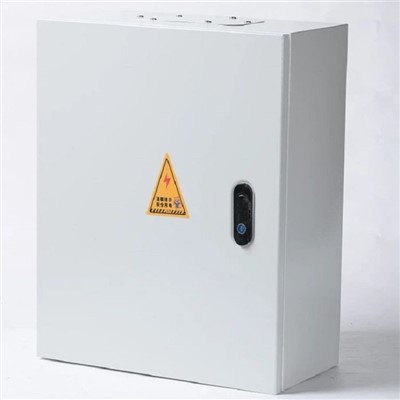
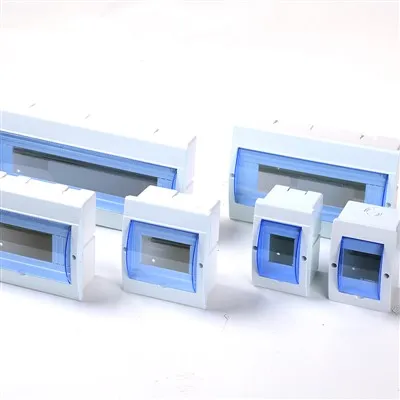
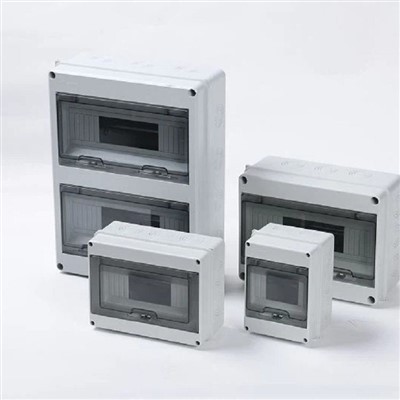
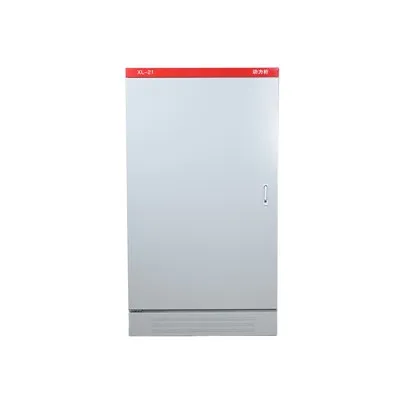
If you are reading this, you are likely specifying or procuring GGD-type low-voltage fixed distribution cabinets, XL-21 power distribution boxes, or similar equipment for a project. Here's what the 2026 shortage means for you:
1. "Available" Is the New Competitive Advantage
In a normal market, buyers compare specifications, prices, and delivery terms. In 2026, the first question is: "Do you have stock or production slots?"
A distributor with inventory on the floor is worth more than a manufacturer with a slightly better price and a 6-month lead time.
2. Standardization Beats Customization
Custom-designed switchgear with non-standard dimensions, special busbar configurations, or unique breaker layouts adds weeks or months to delivery. In this market, standard GGD cabinets with IEC-compliant dimensions and common breaker cutouts are the fastest path to project completion.
Our GGD series offers 129 standardized main circuit schemes and 298 specifications across three sub-types (GGD1/GGD2/GGD3). This is not a limitation - in 2026, it is a supply chain advantage.
3. Geographic Diversification Is Risk Management
China controls approximately 60% of global transformer manufacturing capacity and over 40% of U.S. battery imports. Trade policy shifts, shipping disruptions, or tariff changes can freeze a project for months.
Working with suppliers who maintain multi-source manufacturing (China + Southeast Asia + local assembly) is no longer a nice-to-have. It is project risk mitigation.
4. Smart Features Are Becoming Standard Requirements
Grid operators and large energy users are no longer asking "Can you add monitoring?" They are asking "Why doesn't this cabinet already have it?"
The 2026 grid modernization wave is driving demand for:
- Temperature monitoring in busbar compartments
- Energy metering at the feeder level
- Remote fault alarm via Modbus/Ethernet通过Modbus/Ethernet远程故障报警
- Predictive maintenance data export预测性维护数据导出
Our GGD cabinets are available with integrated smart monitoring modules that retrofit into standard compartment layouts - no custom engineering required.我们的GGD柜体配备集成式智能监控模块,可直接安装到标准隔间布局中,无需定制工程设计.
What Buyers Should Do Now买家现在应该做什么
If you have a project requiring low-voltage distribution equipment in the next 12-18 months:如果您在未来12至18个月内有需要低压配电设备的项目:
✅ Lock in orders early. Do not wait for final construction schedules. Equipment lead times now exceed many project timelines.✅ 提前锁定订单,不要等待最终的施工进度安排.目前设备交付周期已超过许多项目的工期.
✅ Standardize where possible. Specify IEC-standard GGD cabinets with common breaker brands (Schneider, ABB, CHINT, DELIXI) rather than custom designs.✅ 尽可能标准化.采用符合IEC标准的GGD柜体,并使用通用断路器品牌(如施耐德,ABB,CHINT,DELIXI),而非定制设计.
✅ Verify supplier inventory. Ask for photos of actual stock, not catalog pages. In this market, "available" means physically on a shelf.✅ 核实供应商库存.要求提供实际货物的照片,而非目录页面.在这个市场,"有货"意味着实物上架.
✅ Consider modular staging. If full energization is delayed by upstream equipment, stage LV cabinets early and commission in phases.✅ 考虑采用模块化布线方式.如果上游设备导致整体供电延迟,应提前安装低压配电柜,并分阶段进行调试和投运.
✅ Budget for premiums. Equipment that is in stock commands a premium over back-ordered alternatives. Factor this into project economics.✅ 保费预算.有库存的设备比需预订的替代方案价格更高.请将此因素纳入项目经济分析中.
The Long View: 2026-2030 长远展望:2026-2030
The current shortage is not a temporary disruption. It is the opening phase of a decade-long infrastructure buildout.当前的短缺并非暂时性的中断,而是长达十年基础设施建设的开端阶段.
McKinsey forecasts $6.7 trillion in global data center infrastructure investment through 2030. Nvidia estimates $1 trillion for AI-related data center upgrades alone. Global power investment is projected to hit $3.3 trillion by 2026.麦肯锡预测,到2030年全球数据中心基础设施投资将达到6.7万亿美元.英伟达估计,仅与人工智能相关的数据中心升级投资就将达到1万亿美元.预计到2026年,全球电力投资将达3.3万亿美元.
For electrical equipment manufacturers, this is a historic demand cycle. For buyers, it is a procurement environment that rewards early planning, supplier relationships, and flexibility.对电气设备制造商而言,这是一个具有历史意义的需求周期,对采购方来说,则是一个鼓励早期规划,供应商关系和灵活性的采购环境.
The companies that thrive in this market will not be the ones with the lowest prices. They will be the ones that deliver when nobody else can.在这个市场中取得成功的公司,不会是价格最低的那些.它们将是当别人都无法做到时,依然能够提供服务的那些.
About QHECO 关于QHECO
We manufacture GGD low-voltage fixed power distribution cabinets, GCK/GCS withdrawable switchgear, and XL-21 power distribution boxes for power plants, substations, industrial facilities, and commercial infrastructure worldwide.我们为全球的发电厂,变电站,工业设施和商业基础设施生产GGD低压固定式配电柜,GCK/GCS抽出式开关设备以及XL-21配电箱.
- IEC 60439-1 / GB7251.1-2013 certifiedIEC 60439-1 / GB7251.1-2013 认证
- 129 main circuit schemes, 298 specifications129种主电路方案,298项规格
- Standard delivery: 15-20 working days for common configurations标准交货:常规配置15-20个工作日
- Smart monitoring options available智能监控选项可用
- OEM/ODM customization supported支持OEM/ODM定制